
Institutional & Operating Architecture
Turn mandate and strategy into a coherent operating system: actors, decisions, information, dependencies, controls and evidence.
Explore →Pole I
A chart of boxes is not yet a system. Bramston makes authority, information, capital, dependencies and accountability legible enough to operate—and robust enough to survive scrutiny.

The governing question
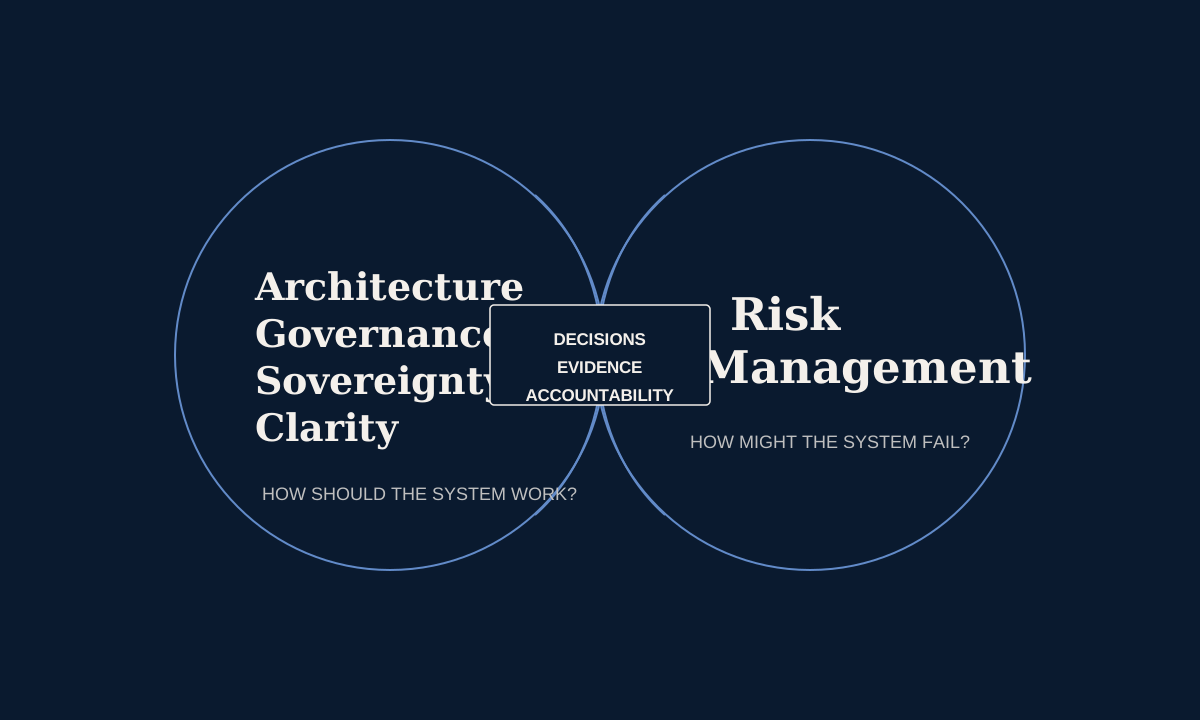
Institutional architecture defines the relationship between mandate, authority, information, technology, resources and accountability. Governance makes the relationship explicit. Sovereignty determines which choices and dependencies must remain controllable. Clarity makes the system usable.
Capabilities
Turn mandate and strategy into a coherent operating system: actors, decisions, information, dependencies, controls and evidence.
Explore →Clarify who decides, on what basis, with which information, under what limits and with which accountability.
Explore →Identify the functions, dependencies and capabilities that must remain controllable under pressure.
Explore →Design technology, data and financial infrastructures around control, continuity, jurisdiction and accountable access.
Explore →Translate purpose into roles, workflows, information and measurable execution without reducing complexity to slogans.
Explore →Structure systems whose failure has consequences beyond the organisation itself.
Explore →Explore the complementary discipline that completes the operating view.