
Architecture, Governance, Sovereignty & Clarity
We design the institutional logic through which authority, information, capital, technology and accountability work together.
Explore capabilities →How should the system work?
Expertise
Bramston integrates institutional architecture with risk management so that authority, capital, information, technology and exposure are considered as one operating reality.
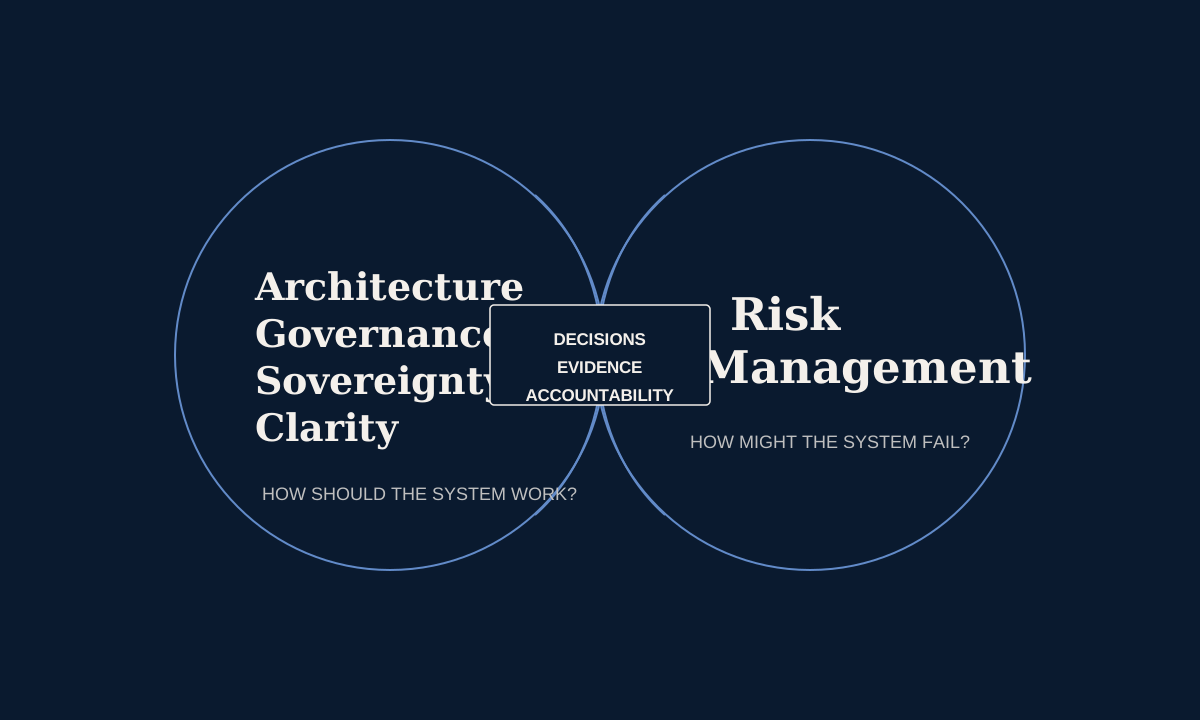
Two complementary poles
We design the institutional logic through which authority, information, capital, technology and accountability work together.
Explore capabilities →How should the system work?
We test where exposure begins, how it travels, what fails under pressure and which controls genuinely change the outcome.
Explore capabilities →How might the system fail?
Capabilities
The architecture remains deliberately controlled: twelve capability pages, each linked to a defined institutional problem and method.
Turn mandate and strategy into a coherent operating system: actors, decisions, information, dependencies, controls and evidence.
Explore →Clarify who decides, on what basis, with which information, under what limits and with which accountability.
Explore →Identify the functions, dependencies and capabilities that must remain controllable under pressure.
Explore →Design technology, data and financial infrastructures around control, continuity, jurisdiction and accountable access.
Explore →Translate purpose into roles, workflows, information and measurable execution without reducing complexity to slogans.
Explore →Structure systems whose failure has consequences beyond the organisation itself.
Explore →Build a decision-grade view of risk across strategy, operations, finance, technology, people and governance.
Explore →Interpret political, economic, regulatory and regional change as operational choices rather than background commentary.
Explore →Define the services that must continue, the tolerances that matter and the dependencies that can break them.
Explore →Connect technical exposure to institutional consequence, control ownership and recoverability.
Explore →Test whether a transaction can be authorised, funded, documented, completed and defended under real constraints.
Explore →Prepare institutions and systems to retain control when disruption becomes consequential and time is compressed.
Explore →